


Definition
A general term used to describe a location, spot, or position.
| Arabic | مَكَان |
| Translitertion | Makān |
Pronunciation | |
Grammatical Information
- Part of Speech: Noun (اسم – Ism)
- Gender: Masculine (مُذَكَّر – Mudhakkar)
- Number: Singular (مُفْرَد – Mufrad)
Example Sentences
| Arabic | Transliteration | English Translation | Pronunciation |
| أَيْنَ الْمَكَان؟ | ‘Ayna al-makān? | Where is the place? | |
| هَذَا مَكَان جَمِيل | Hādhā makān jamīl. | This is a beautiful place. | |
| أُحِبُّ هَذَا الْمَكَان | ‘Uḥibbu hādhā al-makān. | I love this place. | |
Related Words and Phrases
- Synonym (مُرَادِف): مَوْضِع (mawḍiʿ) — Location/Spot
- Words from the Same Root:
- تَمَكَّنَ (tamakkana): To be able / To have control
- أَمْكَنَ (‘amkana): To be possible
Cultural Context
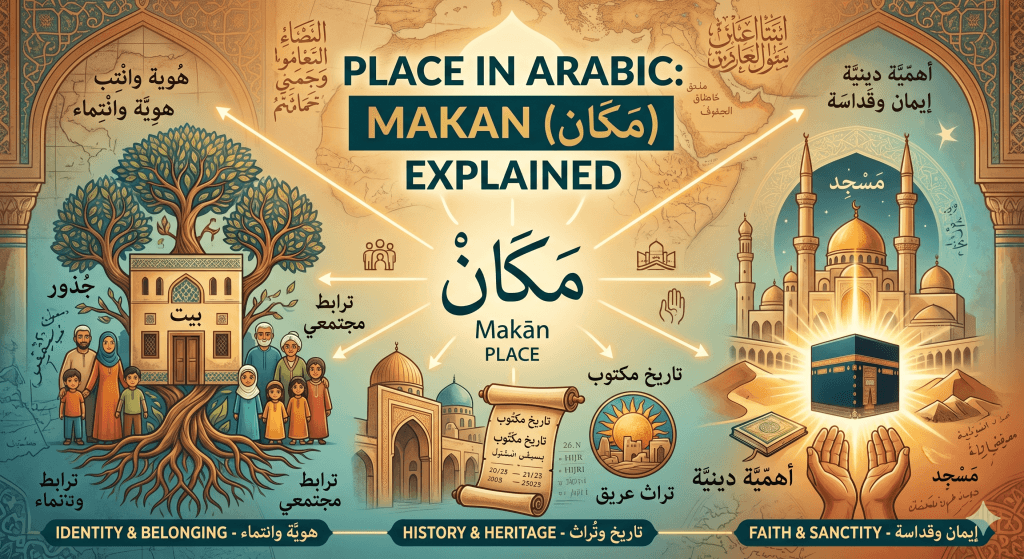
In Arab culture, the concept of “place” (مَكَان) extends beyond mere geography. Locations often carry deep historical, social, and emotional weight. Homes (بُيُوت), neighborhoods (أَحْيَاء), and cities (مُدُن) are tightly woven into family ties and community identity. Furthermore, certain places hold profound religious significance, such as mosques (مَسَاجِد) and various holy sites throughout the region, making the “place” a cornerstone of cultural belonging.